Hydrogen is light in weight even when compressed, so it isn't
feasible to transport it over long distances because the cost per
ton can impact severely on the retail and wholesale price of the
green hydrogen affecting its uptake by transport.
In the case of compressing the hydrogen gas to 350 bar, because it will use more electricity, in Amgas's case this exercise will be profitable because it will need more waste to generate the electricity, thereby earning more credit and result in additional earnings from the by-products.
However to go to the next step and liquefy it would mean that around 30% of the energy in the hydrogen would be lost.
The Global NRG Hydrogen cube
In order to facilitate a way of both transporting green hydrogen economically and quickly establishing low cost retail outlets, Global NRG in a JV with a composite tank manufacturer as developed a novel way of accomplishing both.
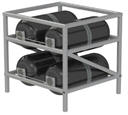
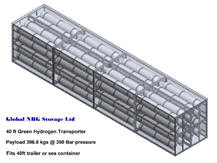
Four high pressure composite tanks at 350 bar have been encapsulated in a cube to make up 25 kg of stored hydrogen. These cubes can be stacked in varying numbers on flat-bed trailers or trucks with a 40ft trailer able to carry 16 cubes or 400kg of hydrogen. In a B-double format this would be 800kg enough to keep 45 buses or 52 trucks fueled for a day.
In the case of compressing the hydrogen gas to 350 bar, because it will use more electricity, in Amgas's case this exercise will be profitable because it will need more waste to generate the electricity, thereby earning more credit and result in additional earnings from the by-products.
However to go to the next step and liquefy it would mean that around 30% of the energy in the hydrogen would be lost.
The Global NRG Hydrogen cube
In order to facilitate a way of both transporting green hydrogen economically and quickly establishing low cost retail outlets, Global NRG in a JV with a composite tank manufacturer as developed a novel way of accomplishing both.
Four high pressure composite tanks at 350 bar have been encapsulated in a cube to make up 25 kg of stored hydrogen. These cubes can be stacked in varying numbers on flat-bed trailers or trucks with a 40ft trailer able to carry 16 cubes or 400kg of hydrogen. In a B-double format this would be 800kg enough to keep 45 buses or 52 trucks fueled for a day.
 |
 |
With an established distributor or a transport depot a fully loaded trailer can be parked at the distributor or depot and rotated each time the gas has been depleted.
In the case of a new distributor a varying number of cubes can be placed with the distributer on a rotating basis and as the demand increases additional cubes added until it reaches a stage where a small trailer loaded with cubes can be rotated instead.
Cubes also fit neatly with home and small business microgrids because one or two cubes would last for a month or more with the closest distributor exchanging the depleted cubes with full ones.When green hydrogen is stored at a home if the home occupant owns a FCEV they would be able to refuel at home just like an EV can be recharged at home except that refueling the FCEV will only take minutes whereas an EV takes all night.
Rail
Twenty and forty foot containers are fitted out with cubes and used for the long haul transportation of green hydrogen by rail to Sydney and distributing via the Moorebank and St Marys intermodal terminals, the Central Coast, and Newcastle area and even to Brisbane and Melbourne just like sea containers are moved around by rail.
The mobile filling station contained in a container fits on a rail bogie or a flatop strailer and can be placed in a transport depot to fuel fleet vehicles. There is a dispensing unit on the left front side complete with refueling nozzle and a fast refill valve on the righhand side.
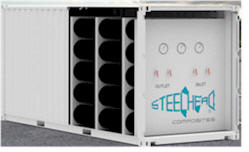
A mobile filling station suitable for rail transport and transport depots
/